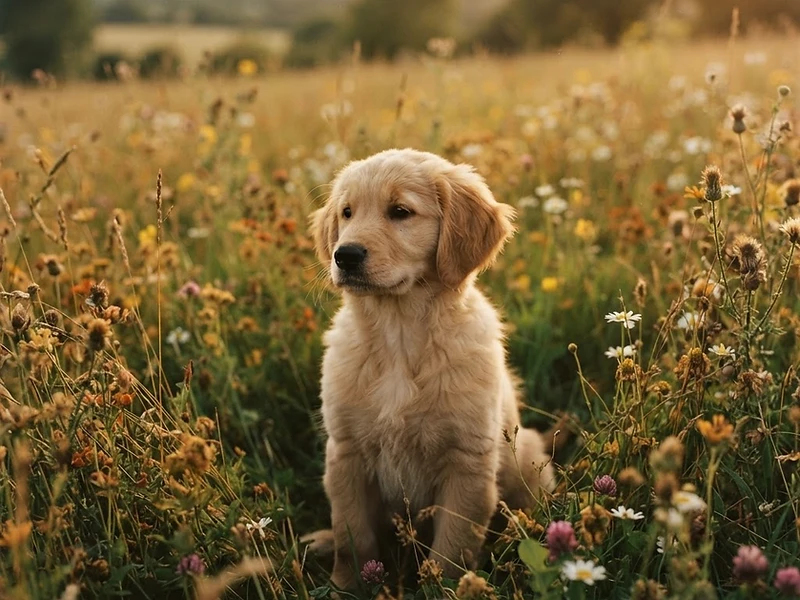





New puppy, new home, new family.
Two skills shape the first months more than any others: helping your puppy join a home that already has pets, and teaching them to love their crate. Here's how to do both — calmly, and without forcing it.
Three principles that make or break it
Every introduction and every crate session rests on these. Skip them and you'll spend weeks undoing the damage.
Go at their pace, not yours
Every new animal sets the timeline. Forcing a greeting before a pet is ready is the #1 cause of lifelong friction — patience now prevents months of repair work later.
Safety over speed
Use gates, crates, leashes, and separate rooms as training wheels. Physical barriers let everyone decompress while they learn the new normal.
Scent before sight, sight before contact
Swap bedding, let them smell each other under a door, then see each other at a distance — long before they ever share a space.
Introducing your puppy to other pets
The first meetings set the tone for years. Slow, structured, and supervised beats hopeful and hands-off every time.
Meeting a resident dog
Swap scents first
Before any face-to-face, rub a towel on each dog and place it near the other's bed. They learn 'this smell lives here now' without the pressure of a stranger in their space.
Neutral-ground meeting
Meet on a sidewalk or park neither dog considers theirs — walk parallel, gradually converging. Avoid tight leashes; tension travels down the lead and reads as threat.
Parallel walks, then loose greet
Walk together a few paces apart, closing the gap as both stay relaxed. Let the sniff happen naturally — three seconds, then call away and reward calm.
Supervised indoor time
Back home, remove high-value toys and food bowls. Keep a drag-line on the puppy. Short, successful sessions beat one long tense one — quit while it's still going well.
Separate when unsupervised
For the first weeks, crate or pen the puppy whenever you can't watch. Trust is earned in increments; alone-time accidents undo days of goodwill.
Meeting a resident cat
Give the cat an escape
Cat-only rooms with a baby gate, high perches, and litter access the puppy can't reach. The cat must always be able to leave on their own terms.
Scent-swap before sight
Rub a cloth on the puppy, leave it near the cat's resting spot — and vice versa. Reward calm interest. This can take days; don't rush it.
Gate the doorway first
Let them see each other through a baby gate with the puppy on leash. The cat chooses whether to approach; the puppy learns to stay calm when they do.
Reward the cat's presence
Pair every calm cat appearance with a high-value treat for both animals. The puppy learns 'cat appears = good thing'; the cat learns 'puppy is not a threat'.
Never let the puppy chase
A single chase can teach the puppy it's a game and the cat that it's prey. Interrupt instantly, every time, for months — this habit is everything.
Be patient — it takes weeks
Cats and puppies can absolutely become friends, but cats set the pace. Some take a few days; many need several weeks. Push them and you set the whole relationship back.
Small animals & fragile companions
Rabbits & small furries
Prey drive is real. Keep them in a secure enclosure out of the puppy's reach, and only allow calm, leashed observation. Many pups can learn small pets are family — but some never can, and that's okay.
Birds
Cages up high, away from lunging range. Supervise all interactions; a flapping bird triggers chase. Teach a strong 'leave it' before the bird is ever out.
Older or frail dogs
Give the senior their own quiet room. Puppies are relentless; even friendly play can injure an older dog. Scheduled, short, leashed visits protect the bond and the body.
Crate training, done right
A crate isn't a cage — it's a den. Done well, it becomes the one place your puppy chooses to rest, and the single most useful tool in the first year of dog ownership.
Size it right
Big enough to stand, turn, and lie flat — but not so big they use one end as a bathroom. Use a divider for a puppy and expand as they grow.
Place it somewhere central
Not a garage or basement. The crate lives where the family is, so the puppy learns 'my den is part of the home' instead of feeling exiled.
Make it a happy place
Meals, stuffed Kongs, and quiet chew toys happen in the crate. Never slam the door on a whining pup — close it only during calm moments.
Never use it as punishment
The crate must always mean safety, not exile. If they associate it with 'bad dog,' you lose the tool that makes the first year survivable.
The five-step progression
Toss treats in, door open
Let the puppy walk in and out freely for treats and meals. Don't close the door yet — they're learning 'going in is my choice and it's great'.
Add a cue and brief closes
Say 'crate' as they enter, drop a treat. Close the door for 10 seconds while they eat, then open it. Build only when they're calm.
Short absences, same room
Close the door, sit nearby for one minute, return and release while calm. Gradually extend time — always returning before they whine at first.
Leave the room
Once they settle for 5 minutes with you present, step out for 30 seconds, then back. Stretch the absence only as fast as they stay relaxed.
Overnight and workdays
By week three most pups can sleep through the night crated. For workdays, keep early sessions short and always tire them out first.
Surviving the first nights crated
The first three or four nights are the hardest. These small habits make a big difference in how fast your puppy learns to settle.
- Move the crate next to your bed for the first week — your breathing and scent help them settle.
- Cover three sides with a blanket to make it den-like and block distractions.
- A frozen Kong at bedtime gives them something to do as they get drowsy.
- Take them out for a final potty right before you close the door — every single night.
- If they cry, wait for a pause before you respond. Rushing over teaches 'crying opens the crate'.
Common bumps — and what to do
My puppy screams the moment the door closes
You closed it before they were ready. Go back to step 1 — only close during a calm, occupied moment (mid-chew), for seconds. Rebuild the association slowly.
They soil the crate
It's too big, they were left too long, or they came from a puppy-mill setup where soiling was unavoidable. Shrink the space, shorten the time, and rule out a UTI with your vet.
The older dog growls at the puppy
Growling is information, not aggression — listen to it. Separate immediately and shorten the next session. Respect the older dog's limits; they're setting healthy boundaries.
The cat won't come downstairs anymore
Normal. Set up the cat's essentials in their safe room and give it days or weeks. Let the cat decide when to rejoin; never carry them toward the puppy.

